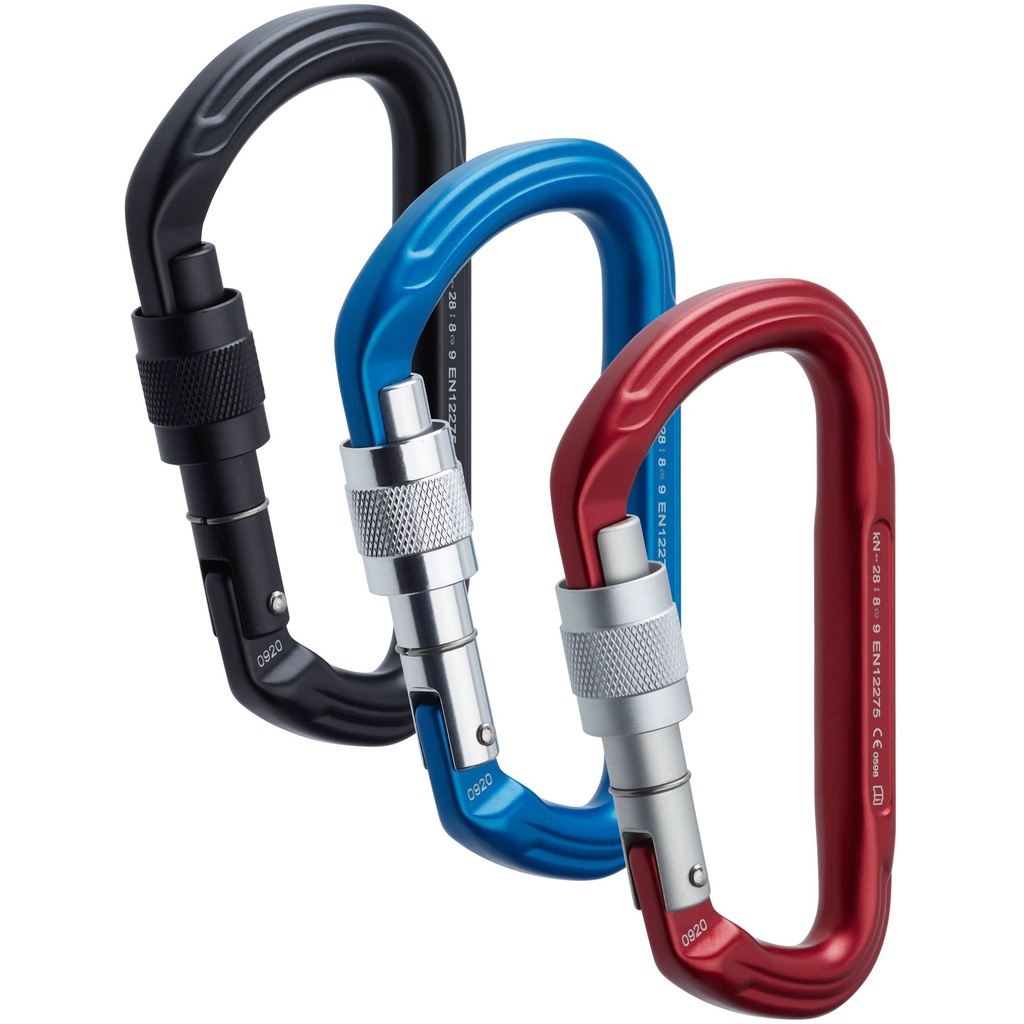
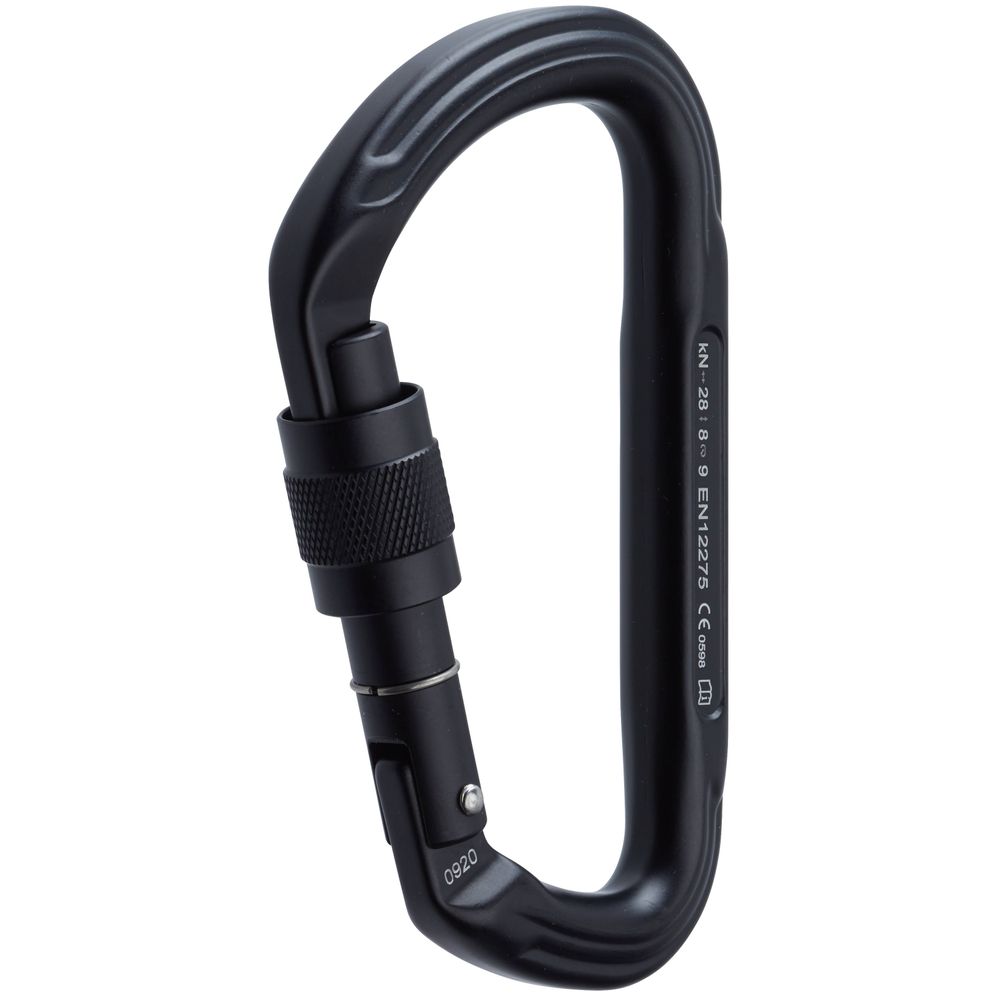
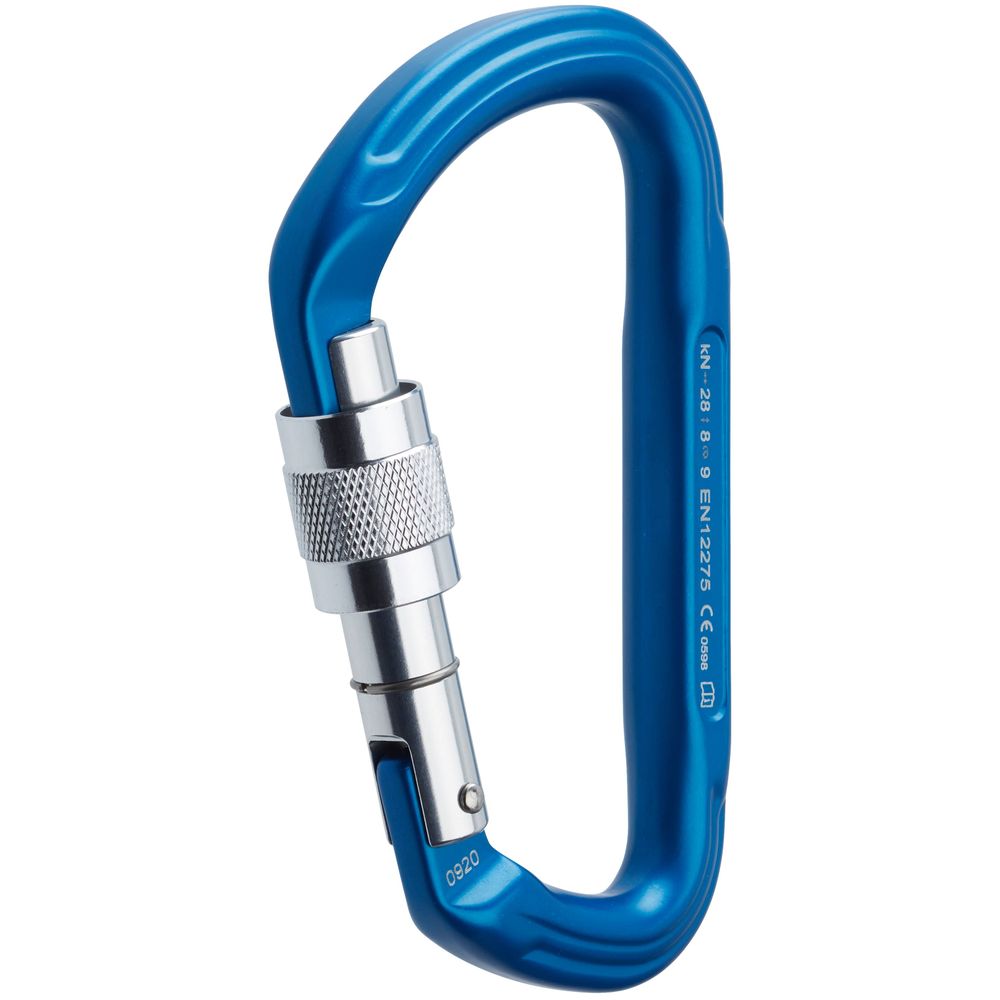
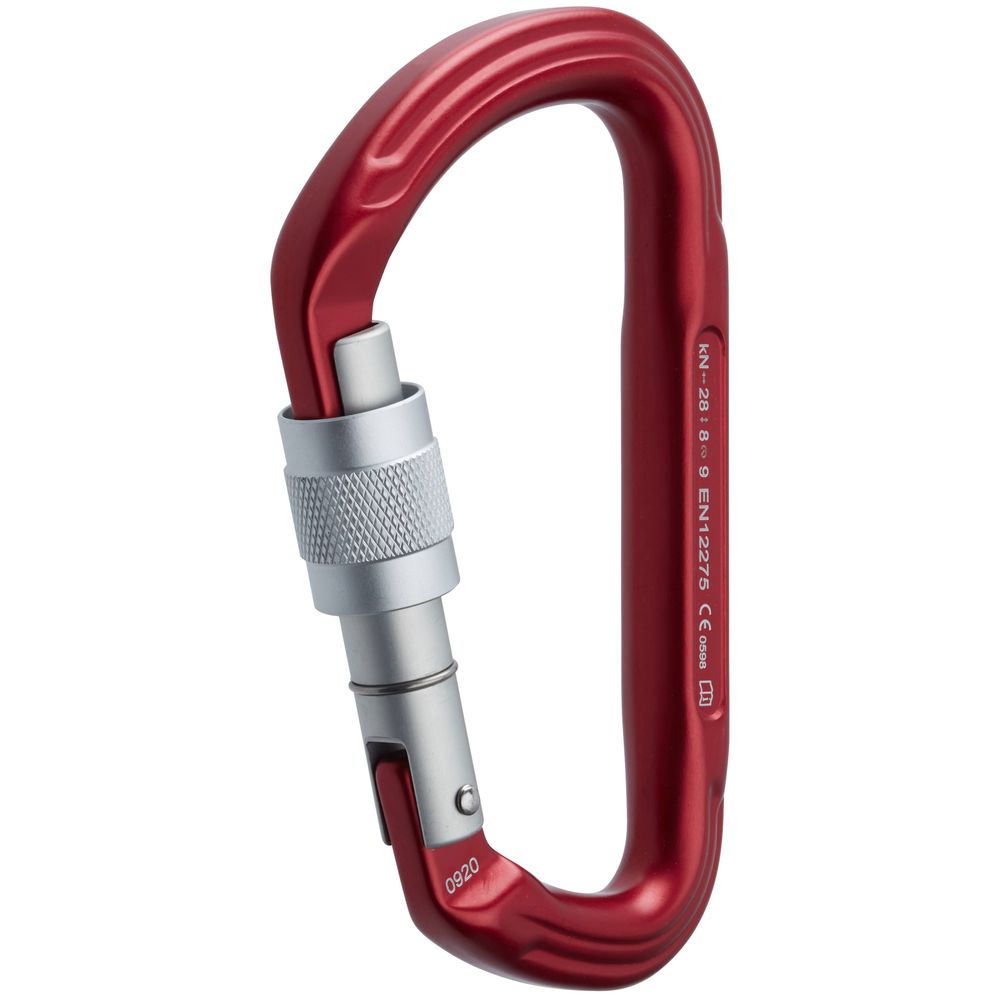
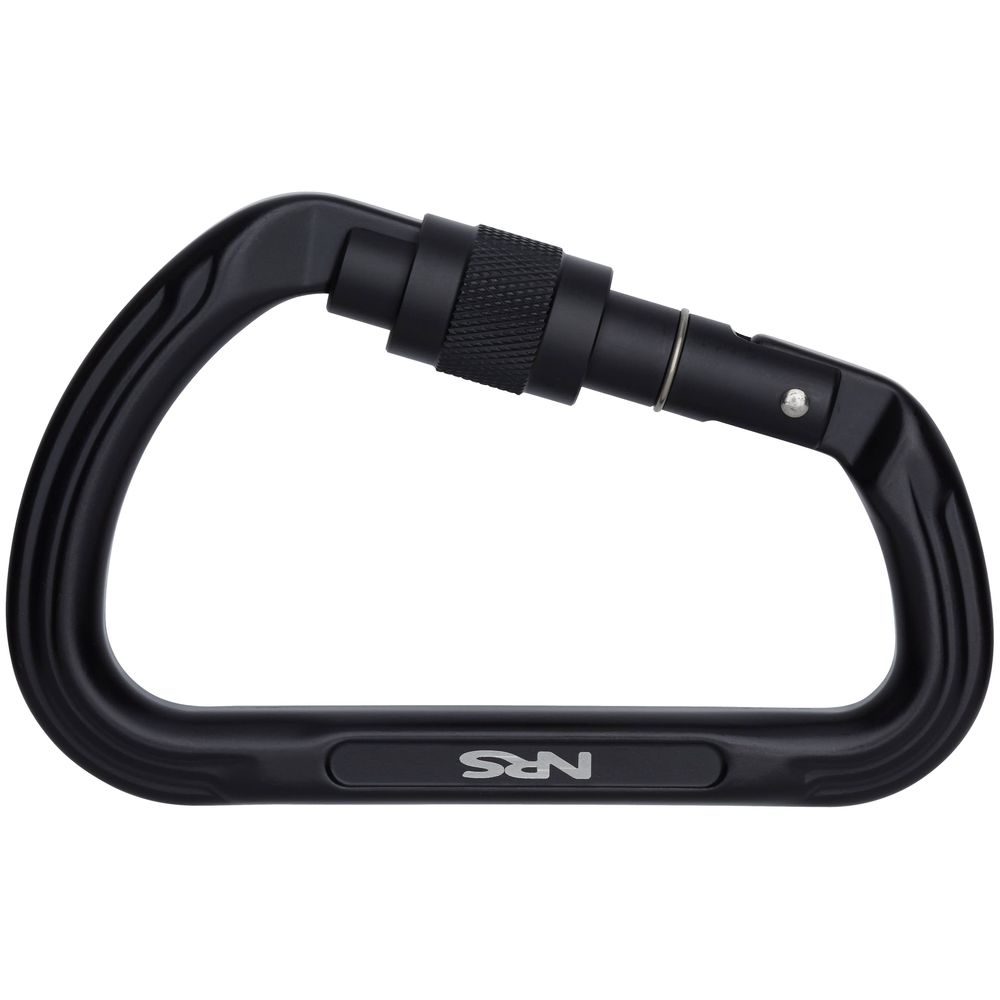
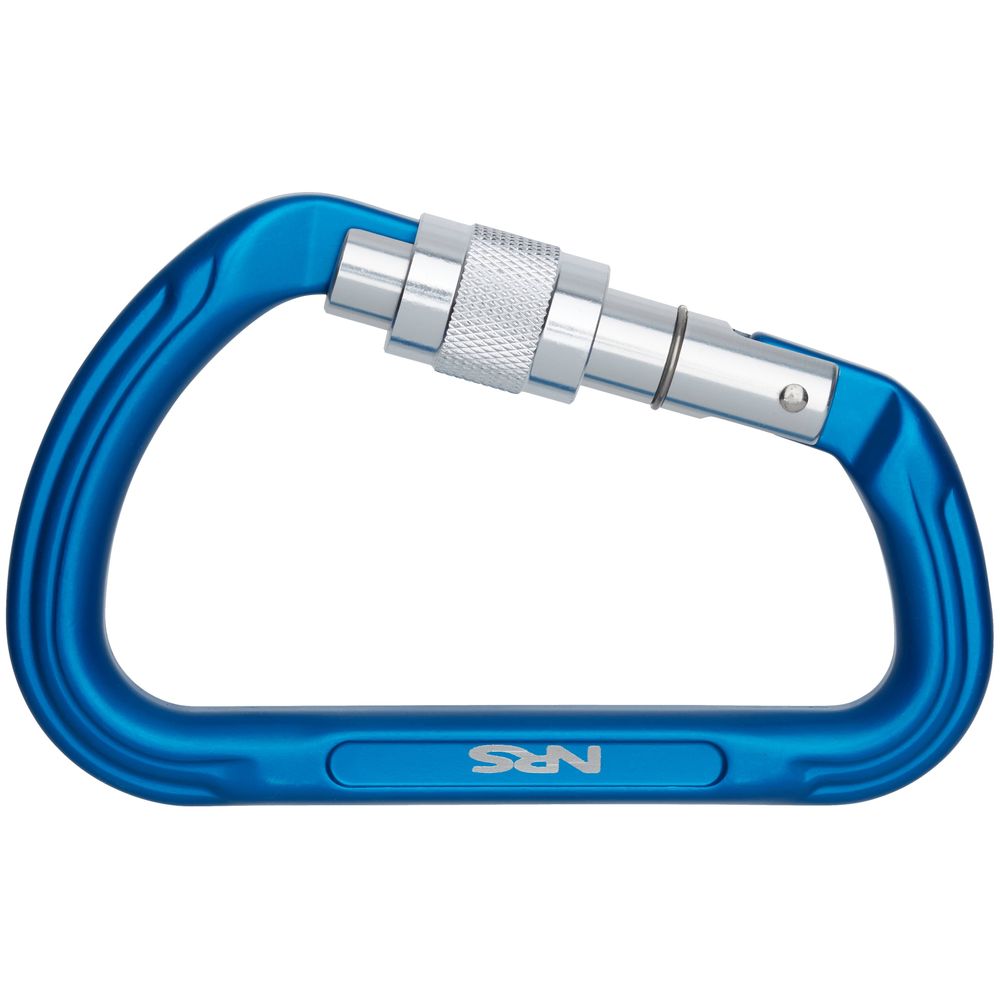
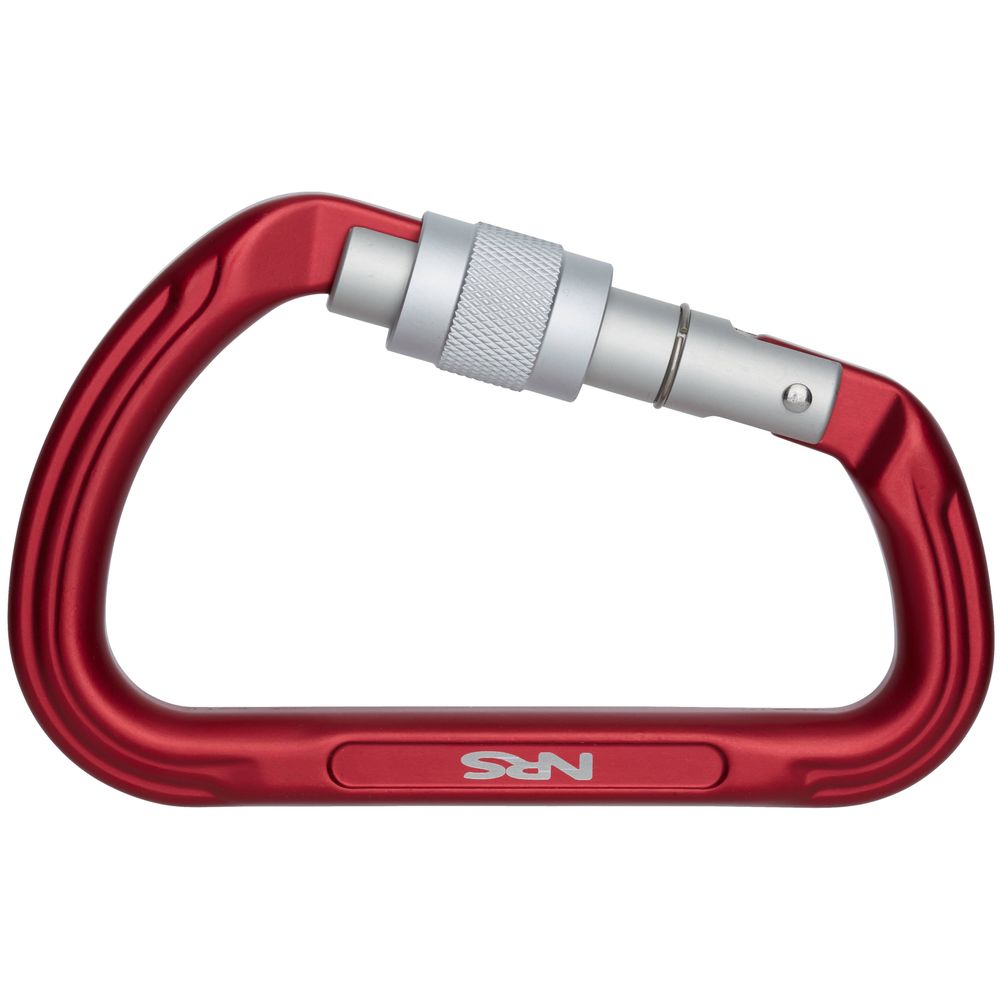
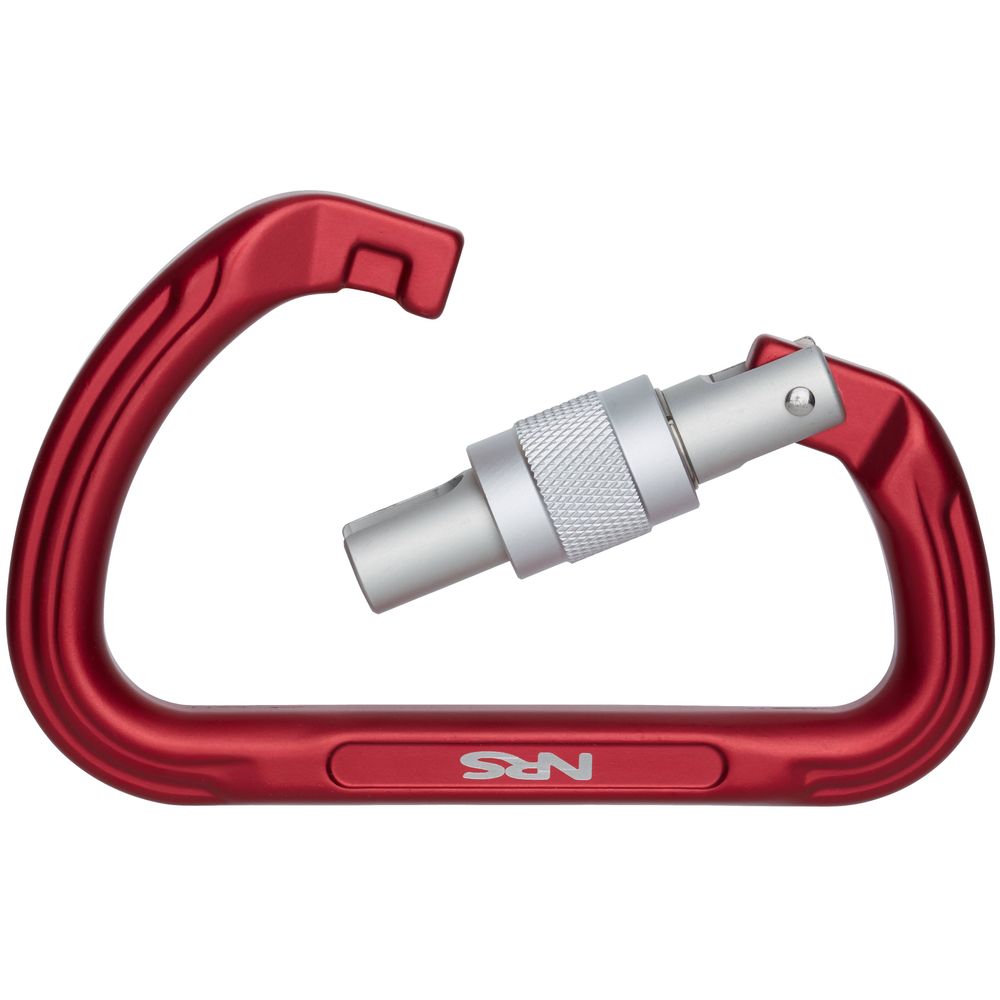
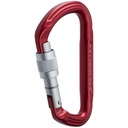
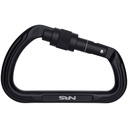
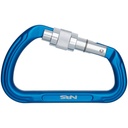
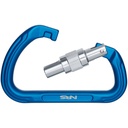
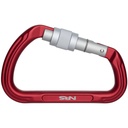
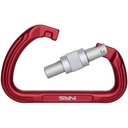
The NRS Nuq Screw Lock Carabiner is built for paddlers who'd rather trust a simple, deliberate mechanism than a spring-loaded one when a rescue-kit carabiner actually has to work. Hot-forged from anodised AL-7075 aluminium alloy with stainless steel rivets and wires, it's rated to 28kN closed-gate and certified to CE EN362 and EN12275 — genuinely rescue-grade, and £1 cheaper than its twist lock sibling.
Why Screw Lock — Fewer Moving Parts, Fewer Ways to Fail
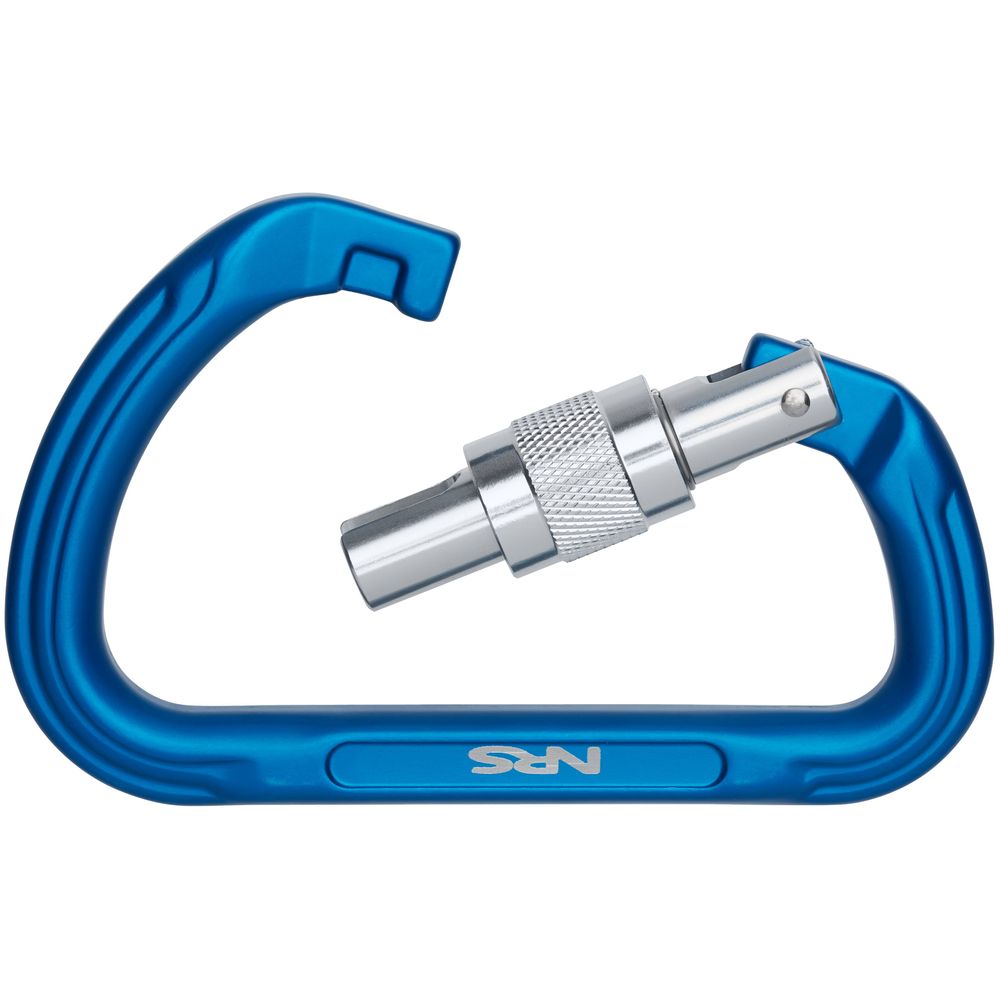
A screw lock has no spring and no cam — just a threaded sleeve you turn to lock and unlock. That simplicity is the point: fewer moving parts means less that can jam with grit, freeze shut with ice, or wear out from repeated spring fatigue over a season of hard use. It's a genuine, independently-documented advantage over spring-loaded twist and auto locks for prolonged harsh-condition use, not just NRS's own marketing claim. The trade-off is speed — engaging and releasing the sleeve takes a deliberate two-handed action, slower than a twist lock's instant one-handed clip. For paddlers who've had a spring-loaded carabiner jam or freeze mid-trip, or who simply want one less point of failure in a rescue kit, that trade is worth making.
What the 28kN and 9kN Ratings Actually Mean
This carabiner carries a 28kN closed-gate rating and a 9kN open-gate rating. A kilonewton (kN) measures force — roughly 225lbs — and these figures are the load the carabiner withstands before failing in each state, not a working-load recommendation. The gap between the two matters in practice: a carabiner loaded through a gate that hasn't fully screwed shut is nowhere near as strong as one loaded correctly, so fully engaging the sleeve before loading isn't a formality — it's what the rated strength actually depends on.
Certified for Water Rescue, Built From AL-7075 Alloy
Certified to CE EN362 and EN12275 — connector and rescue-hardware standards, not a claim of suitability for lead climbing or fall-arrest use under climbing-specific standards. Construction is anodised AL-7075 aluminium alloy with stainless steel rivets and wires — a more specific alloy grade than the plain "aluminium alloy" most competing carabiners are described with — at 94g, with a 22mm gate opening and 116mm x 75mm dimensions.
Who Should Choose Screw Lock (and How Many to Buy)
If you're equipping or restocking a whitewater or touring rescue kit — solo, tandem, or as a coach building a club kit bag — this is a certified, mechanically simple locking carabiner that pairs naturally with boats like the Silverbirch Agent 88. A commonly used rescue-kit guideline is 4:3:2:1: four locking carabiners, three pulleys, two prusiks and one length of webbing, with locking types the only carabiner recommended for river rescue — so most kits need more than one. If speed of one-handed clipping matters more than resistance to grit and ice for your conditions, the NRS Nuq Twist Lock Carabiner is the faster-clipping alternative in the same family.
Available in Black, Blue and Red. Full delivery information and warranty terms apply as with any order from The Boathouse. Browse the rest of the Rescue Kit range — including the Palm Autolock, Palm Screw Gate and Palm Side Swing HMS Autolock — to build a complete rescue kit, or pair with a Palm Bolt 20m Throwline or Palm Equipment Quick Tow Belt.
Frequently Asked Questions
What does the 28kN rating on this carabiner mean?
The NRS Nuq Screw Lock Carabiner is rated to 28kN closed-gate and 9kN open-gate — kilonewtons measuring the force it can withstand before failing in each state, not a working-load recommendation. Because the open-gate figure is so much lower, fully screwing the sleeve shut before loading is what actually delivers the rated strength, not just resting the gate closed.
Why choose a screw lock carabiner over a twist lock or autolock?
A screw lock has fewer moving parts than a spring-loaded twist or auto lock, so there's less to jam or fatigue when grit, ice or prolonged wet use gets into the mechanism — a real advantage for a rescue-kit carabiner that has to work first time. The trade-off is a slower, more deliberate two-handed engagement rather than an instant one-handed clip.
Is a screw lock carabiner secure enough for fast rescue use?
Yes — once engaged it's as strong and secure as the twist lock sibling; the difference is speed, not strength. A screw lock takes an extra deliberate turn to lock and unlock, so it suits paddlers who prioritise mechanical reliability over the fastest possible one-handed clip; for genuinely fast in-water rescue work, the NRS Nuq Twist Lock Carabiner trades some of that reliability for speed.
How many carabiners should be in a whitewater rescue kit?
A widely used rescue-kit guideline is 4:3:2:1 — four locking carabiners, three pulleys, two prusiks and one length of webbing — with locking types the only carabiner recommended for river rescue. Most coaches and paddlers building or restocking a kit will need more than one.
What's the difference between the NRS Nuq Screw Lock and Twist Lock Carabiner?
Both are AL-7075 aluminium alloy, CE EN362/EN12275 certified and part of the same NRS Nuq family. The Screw Lock has fewer moving parts and holds up better to grit, ice and repeated wet-dry cycles over time; the Twist Lock sibling trades some of that resilience for faster one-handed clipping, and costs £1 more. Choose based on the conditions you'll actually use it in.
Specifications
| Colour | Red, Blue , Black |